Bikinis, Weeds, and Surrender.

I’ve never possessed a green thumb. I don’t even like being outdoors unless I’m tanning (and there’s no bugs). However, this is the first summer I’ve been solely responsible for the yard work. Prior to this year, my former spouse and I would pay someone to come mow the lawn, pick up doggy doo, spray weeds, etc. My income alone doesn’t support that type of luxury. And that’s ok! For the most part, I seem to have been keeping on top of it. With the help of a wonderful neighbor who got my lawn mower working, I’ve been able to keep the lawn mowed, the doggy doo picked up, and I even figured out how to use the whipper snipper without being scared of it. Win!

But there’s one area of yardwork that I have not been able to keep on top of. Weeds. I paid someone to come and do some weed treatments to the front lawn this summer, which I don’t regret, but the back yard? *shudder*

I’ve been spending a lot of time on my back deck this summer and I’ve been watching them grow. Taller. Bigger. Deeper. Uglier. And I became overwhelmed by them. Apparently, glaring and scowling at weeds doesn’t make them go away. Although, I gave it a valiant effort.

No. Weeds don’t just go away. In fact, if they aren’t dealt with, they will only grow, and eventually, they will take over everything that was once beautiful.

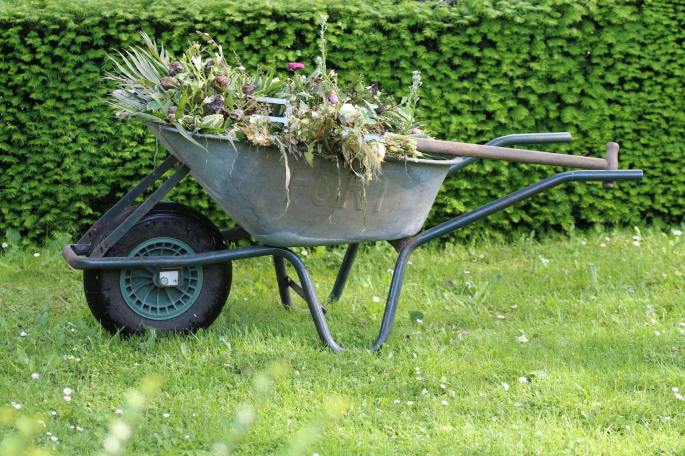
Yesterday, I finally couldn’t stand the sight of the field of weeds that had grown all around the rock edges of my home and all throughout the gravel areas of my back yard. So, in my bikini (because…tanning), I donned my work gloves, grabbed a garbage can, and I set to work. Starting in one area, moving slowly, I pulled weeds. One. by. One. Ensuring the root came up with each one.

Throughout the hours I spent pulling weeds, I had a few thoughts running through my mind. I believe that the Lord used my weed pulling frustration to teach me some valuable lessons about the weeds that have sprouted in my own life. So here goes:

1. Weeds are ugly and they take over everything beautiful very quickly – if they aren’t dealt with. There have been numerous weeds that have grown in my life. Some of them have taken over other parts of my life. Parts that used to be beautiful. Like the part where I used to love Jesus more than anything else in this world. Doubt, hurt, fear, and lack of trust are weeds that have tried to destroy this part of me. This is just one small example.

2. The more you let weeds grow, they become bigger, thornier, and deeper-rooted. These weeds are more difficult to get rid of. They cause pain when you try to remove them. They want to hold on. The more I’ve chosen to ignore the promptings, reminders, and convictions of the Holy Spirit, the more certain sins have grown. Sins that I’ve become attached to. These sins are difficult to say no to. Even though they cause only pain in my life, they are also painful to uproot.

3. Weeds pop up easily. They don’t require a lot of water or sunshine. They’ll grow wherever they see an opportunity. If we truly want weeds gone, we can’t just wait until we see evidence of them. We have to do preventative maintenance as well. (*Ahem* Round-up *Ahem*) If I am not spending time with the Lord on a regular basis, spending time in His presence, reading His Word, it is easy to live the way that seems most natural to me. With selfish intention and ambition, focusing on what makes me feel good and happy…even if it is only for a moment. If we surround ourselves only with people who don’t share our faith, it’s easy to forget our faith. Regular maintenance is required if we want to keep weeds from growing in our lives. Perhaps a daily invitation is necessary; asking the Lord, as David did. “Search me, O God, and know my heart; try me, and know my thoughts: And see if there be any wicked way in me, and lead me in the way everlasting.” – Psalm 139: 23-24

4. Removing weeds will be painful and it requires a certain posture. Rejecting sin, sin we hold on to, afraid to let it go, isn’t easy. There are reasons we cling to sin. It makes us feel better for a time. It helps us feel like we have a purpose in life. It makes us feel validated. It allows us to feel accepted by certain people. It’s part of our identity. The thing with sin though? It’s deceptive. So deceptive, that we struggle to say no to it. We might even think we have it under control. We can even trick ourselves into believing that we aren’t hurting anybody but ourselves. But in the end, all it really does, is grow. Taller. Bigger. Deeper. Uglier. Until…it eventually has spread and takes over the other beautiful things in our lives.

After a couple of hours of pulling weeds, I also couldn’t help but notice that it would be impossible to pull them out by their roots, without bending low. Whether it was in a squat, a full bow, or on my knees, I had to get low to the ground to do it. And I don’t think it’s any coincidence that when we stop glaring at the weeds in our lives and choose to uproot them, we also must adopt a similar posture. Bowing low, kneeling. Surrendering. It will be impossible to uproot weeds of sin in our lives without first surrendering our will and wants to Jesus. When we bow down, we acknowledge that uprooting sin will be painful, but we also acknowledge His Lordship in our lives. And it might take some time to examine the weeds. It might take some time to get to the place where we can’t tolerate them anymore. It might take some time to recognize why we feel the need to cling to them so tightly. It might take some time to uproot them. But as I slowly stood back upright, stretching out and willing the muscles in my back to stop hurting, I surveyed the rocky areas around my home. And I smiled. It was hard work. But it was worth it. What once was beautiful, overcome by weeds, was made beautiful again. Also, Round-up has become my new best friend.

My God is all I need.

There will likely be a time in our Christian journeys when, like Jacob, we will wrestle with God all night long…But there must eventually come a dawn when we say, “Ok, God, You win…Not my will but Thine be done.” – Gary Thomas

There is a simple black and white canvas in a frame that hangs on my dining room wall that states: “Live with eternity in mind.” There is a Bible that sits in my basement beside my prayer chair. There is a playlist of worship music on my phone. There is a group of people I have memorized Scripture with. There is a women’s ministry that I used to write for. There have been convictional reminders to me in small ways, here and there. All of these things, over the past few months, I have ignored…or at the very least…distanced myself from. Someone mentioned to me awhile ago that I haven’t updated my blog lately. My response? “I write about a specific topic and theme. That theme has not been the theme of my life lately. I will not be hypocritical.”

A lot has happened in my life since last Fall, when I last wrote about my desire to trust Jesus in this crazy season. The short version: I stopped trusting.

Choosing to not trust Jesus wasn’t something I just woke up and decided to do one day. In fact, I remember very sleepless nights, agonizing over whether I really could and should trust Him anymore. After all, I had trusted Him. My whole life. And where did it get me? Divorced. Reduced from a full-time mom to a part-time one. Having to work three jobs to afford to live – even with alimony and child support. Alone.

I knew that in my marriage, I was lonely. I had accepted the fact that my marriage would never be what I hoped it could be. Healthy. Affectionate. Devoted. Loving. But I had made my vows and I was faithful to the end. It wasn’t until a few months after my marriage was over that I was offered something I didn’t even know I had longed for. Craved even. Affection. I’ve come to recognize that I have felt starved of physical affection for most of my adult life. I think, as a defense mechanism, I acted as one who didn’t want it, didn’t care for it. Because it’s easier to pretend we don’t care about something than to want it so desperately, and never receive it, isn’t it? So, when it was offered, I willingly accepted it.

It wasn’t an easy decision. I knew it meant distancing myself from God – because, in essence, it was disobedience. And it’s impossible to live contrary to God’s rules and still remain close to Him. So I distanced myself from Him in an effort to relieve the immense loneliness I came to understand I was feeling. And it worked…temporarily.

This decision didn’t just come from a place of loneliness though. It also came from a place of significant fear. Fear of remaining in this lonely existence forever. Fear of the idea of marriage again one day. Fear of becoming entrapped yet again in an unhealthy relationship. So what do you do when, as a Christian, you don’t want to be alone, but you also don’t ever want to get married again? There’s only two logical answers that I could see. 1. You accept and live a life of celibacy and singleness. Or. 2. You form relationships with people that also don’t seem to care much about marriage. I chose option 2. Because of my deep loneliness. And I’m not talking about the kind of loneliness where spending time with a good friend can help. I craved human affection and love. Desperately. A simple touch on the arm, yes. A hug, yes. A passionate kiss, yes. But mostly: A place where I felt loved. Wanted. Desired. Fully known and accepted. At any cost.

Knowing it would ruin any reputation I had built, knowing it would create distance between me and the God I claimed to love, knowing my behavior could negatively affect my children (although, they were not informed of the details), knowing it would cost me my self-respect, knowing that in the end, it would only bring me grief, I chose to live in the moment and appreciate the affection and care that was offered. Knowing it was wrong; I tried not to care.

But…when your faith means more to you than you think it does, you are left with no choice but to care. Over these past few months, every couple of weeks, I would listen to the following song, and I would try and tell myself that its words were true.

“My God is all I need.” I would repeat these words over and over, knowing they were true, yet, I still couldn’t force myself to believe them. The past few months became a battle ground in my mind between ignoring the convictions of the Holy Spirit and letting myself experience what I had longed for, for so many years. But eventually, conviction won out, along with the prayers of some amazing friends and family members. Because even though I was living my life one way – it was not true to who I really was. And I could not keep living in such a dichotomy.

“If any of you wants to be my follower,” he told them, “you must put aside your own pleasures and shoulder your cross, and follow me closely. If you insist on saving your life, you will lose it. Only those who throw away their lives for my sake and for the sake of the Good News will ever know what it means to really live.” – Mark 8:34-35

The truth of the matter is this: living for our own pleasure provides temporary relief from our pain. But it never lasts. It might make us happy for a time. But in the end, there is only grief. True and lasting joy cannot be found apart from Jesus. I know that now. And when that becomes your belief, you have but only one option left: complete and total surrender. And that can be a very scary thing to do. “But God, I trusted you! I followed You and I obeyed You! And THIS is my life?! Why would You ask me to trust You again? HOW could You ask me to trust You again?” The thought of getting married again is terrifying to me – for numerous reasons. Yet, the thought of spending the rest of my life in this deep loneliness also seems unbearable. But it’s not about me. It’s about Him.

Romans 12:1 says “I urge you…in view of God’s mercy, to offer your bodies as living sacrifices…this is your reasonable act of worship.”

“The Greek word translated “reasonable” is the word logikos. In light of the incredible mercy of God poured out on us (past, present, and future mercies), a full and complete sacrifice of our lives is the only logical response we can make.”1

Currently, it’s Easter weekend, and I can’t help but think on Christ’s perfect example of surrender to His Father. It was total and complete. He willingly surrendered His wants to His Father’s will – allowing Himself to be tortured, to be betrayed, to be murdered in such a brutal way. Christ provided the perfect example of what full surrender looks like. And it was because of His surrender and obedience, that I can come boldly into God’s throne room and receive grace and mercy. It is because of His surrender that my sin does not define who I am any longer. It is because of His surrender that I can be forgiven and spend eternity with Him. It is because of His surrender that I can concede, bow down, and surrender my will and wants and fears as well.

So, in short, I have surrendered. Finally. I choose to mark myself as a bondslave to Christ. Fully His. Fully available for His use. Fully trusting in Him to provide what He sees fit for me – even when trusting is a choice that still scares me. I will overcome my fears with my faith.

“Whom have I in heaven but You? And there is none upon earth that I desire besides You.” Psalm 73:25 has become my prayer. I want to get to that place where the daily choices to trust that I am forcing myself to make turn into a lifetime of trust. I want to desire Jesus more than anything else in this world. Even if that means trusting Him with what seems like a terrifying future. I want to get to the place where Mary was – where she would willingly give up her dowry and future just to pour it out on Jesus’ feet in an act of pure love and surrender to Him. I’m only at the beginning stages of this. Bowing my knee, surrendering my everything to Him, cautiously, but fully, with tears in my eyes, wordlessly pleading with Him to not let me down. Surrender can be terrifying. But I’m hoping that one day I will be able to say the same thing Nancy Demoss states in her book on Surrender: The Heart God Controls:

“The pathway of surrender is not always an easy one. On occasion, I have found myself in some pretty turbulent waters, as a result of saying Yes to God.  There have been points when it seemed like my little boat was going to capsize. But I have learned that there really is no safer place to be than in His will. And in the midst of the storms, I have found joy – indescribable joy. And blessings more often than I can number – blessings to be enjoyed here and now and the anticipation of eternal blessings that I cannot begin to fathom now. It really is true that “there’s no other way to be happy in Jesus, but to trust and obey.”


Take my life and let it be consecrated, Lord, to thee.
Take my moments and my days; let them flow in endless praise.
Take my hands and let them move at the impulse of Thy love.
Take my feet and let them be swift and beautiful for Thee.
Take my voice and let me sing, always, only, for my King.
Take my lips and let them be filled with messages from Thee.
Take my silver and my gold; not a mite would I withhold.
Take my intellect and use every power as Thou shalt choose.
Take my will and make it Thine; it shall be no longer mine.
Take my heart it is thine own; it shall be Thy royal throne.
Take my love, my Lord; I pour at Thy feet its treasure store.
Take myself, and I will be ever, only, all for Thee.2

  1. Nancy Leigh Demoss from her book Surrender: The Heart God Controls. ↩︎
  2. Take My Life and Let it Be by Frances Ridley Havergal. ↩︎

Endnote: I share openly and honestly in this blog from my perspective and experience. It is not my intention or desire to speak negatively about my former spouse. I do not blame him for what was.

*I dedicate this blog to Jesus, Who never gives up on us. And also my friends Charity and Janeen who didn’t give up on me, who gently encouraged me, listened to me, prayed for me, and walked alongside me, even when they didn’t agree with me. Proverbs 17:17 says “A friend loves at all times.” Thank you for being there for me when I needed you the most.

Seasons Change.

I’ve always loved the season of Fall. Closing my eyes, I can almost feel as though I’m 15 again. Stepping off of the school bus, I’d start my short trek home, all the while loving the sounds of the huge leaves of both maple and elm crunch underfoot; the smell of wood burning stoves starting for the cooler temperatures. The leaves don’t tend to crunch as much in Saskatchewan and the maples are far fewer, but the cooler temperatures and the barren tree branches still represent a new season that is coming: winter.

I can’t help but love winter, mainly because there are far fewer insects I have to deal with, but also because of: (and who doesn’t love these?) fireplaces, cozy blankets, good books, hot cocoa with whipped cream, and extra cuddles with my kids during our school mornings.

As much as I enjoy the change of these seasons, there are some seasonal changes in life that I haven’t always enjoyed. Tax season isn’t exactly one I would label as “fun” or “pleasurable”. The season of becoming a new mother can be difficult for some. The season of walking through grief can feel awful. I’ve witnessed friends learning how to navigate the season of becoming empty nesters, which apparently can have its ups and downs. (I wouldn’t know as I haven’t reached that season just yet.)

Some seasons are better than others. Some seasons are worse than others. Some life seasons are chosen, while other seasons can be thrust upon us, sometimes when we least expect it. The past few months in my life have proved to be a significant change of seasons – and, as a result, there will only be more changes to come over the next few years. I’ll be honest: I didn’t exactly handle this most recent seasonal change very well at first. I don’t know about you, but when change is thrust upon me and I don’t know how to handle it, I become fearful…which can lead to emotional reactions due to that fear.

This most recent change of season caused me to fear not only my life and future, but it also caused me to be fearful of other people and even God. There were some weeks where I couldn’t pray, because I would have a panic attack. I still can’t open my Bible, because I will have a panic attack. Worship music was a hard no for awhile (and still is to some extent). So what do you do when you know the help you need the most is from the One you can’t talk to?

For the past couple of years, I’ve written encouraging snippets based on Scripture for a women’s ministry to share with their online following and I’ve written very openly about how Jesus is safe to trust. This recent season has been my turn to decide if I truly believed that. For me, it became a matter of choosing to trust the God who walks on water, even though I couldn’t speak to Him or hear His voice. I did the only things I could do – I listened to Revive Our Hearts podcasts – ones that encouraged and reminded me that, in what has seemed like the worst seasonal change of my life to date, Jesus is still with me…and He isn’t going anywhere. Another is that I have started memorizing Scripture again (a Psalm printed onto computer paper, since I can’t open my physical Bible). Reminding myself, in the only ways I can, that I have chosen to not give up on my faith or on God.

When the proverbial shit hits the fan, when life takes a turn that we didn’t want or didn’t expect, that’s truly when our faith is tested, isn’t it? I’m learning that changes in the seasons of our life can come out of nowhere. Sometimes, they can be exciting: a wedding celebration, a pregnancy, a job promotion, a new home. Sometimes, they can appear to be horrific: a cancer diagnosis, bankruptcy, a child that walks away from the Lord, tragedy. And with some of those changes, there is grief, anger, questioning, or denial. Those responses are pretty typical.

But there is another response. One that might take some time to put into practice. But, and hear me out here, what if….What If…instead of resisting the change we didn’t want, we started dreaming about how we could embrace it? I hear you. You might be asking, “How do you embrace something like cancer or tragedy?” I’m not suggesting we embrace those things, specifically. But what if we embraced the fact that this new change is in our life and we now have an opportunity to respond well to it? What would that look like? Perhaps it could be an opportunity to shine the light of Jesus in a hospital room. Or perhaps it could be an opportunity to learn new things and be able to help others when they are faced with a similar situation. Or perhaps, at the very least, it could be an opportunity to learn how to fully trust Jesus and understand what it means to fully rely on His strength for each new day.

I don’t mean to minimize pain or heartache with pleasant “Christianeze”. Perhaps a better way to explain what I mean would be this way: I’m a volunteer firefighter. I get calls any time of the day or night and I never know what type of situation I’ll be walking into or will have to deal with. We had a difficult call this year and my job required me to do something that “I never thought I could do”. But when your job is to deal with the situation, as horrible or awful as it may be, you do it. I came home after that call and just stared into space for awhile and cried, because the entire situation was traumatizing, for everyone involved. The week that followed was incredibly difficult. Images and sounds from that event intrusively flooded into the forefront of my mind at any given time. But I had close friends who were able to walk with me after that experience, who would let me cry as I tried to process what I witnessed. And now, those intrusive images and sounds are very few and I rarely think about that event. I did something I honestly didn’t know I would be capable of doing. Because I had to. Some people asked me if I still wanted to be on the fire department after that experience. It makes me smile to consider that. Because even though that call was not something anybody would ever want to experience, it did not, even for a moment, deter me from wanting to continue helping people on what can typically be one of the worst days of their lives. I embraced that experience and, because of that, I will be better at handling similar ones in the future, because I had to walk through the first one.

This seasonal change in my life has felt debilitating at times. There are many things that I have lost, and will continue to lose. But as I’ve been dreaming about new possibilities, I am also filled with hope. Growing up, a constant phrase I would often hear my mom say in our home was to, “Look at the positive!” Most of the time, as typical teenagers do, I would roll my eyes in response. But isn’t it funny how some of those things from our childhood can resonate with us in different situations as adults? That reminder to remain focused on the positive has forced me to really consider and look for positive things about this new season. In searching for them, I’ve discovered that there are many to be found. One positive that I hope will come from this new season is a renewed and deeper walk with Jesus. Another positive for me has been seeing kindness from people I wouldn’t normally have expected to see that displayed from. Another has been realizing that, even though I never thought I could have walked this new path, I actually am able to, because I’ve had to. A few people have stated that they have seen so much strength in me – strength I never knew I had. And as I was reminded, that “strength” is the power of God in me. It is not something I possess in and of myself. It never will be. But friend, I’m here to remind you of this truth: in whatever change of season you choose to face, or will be forced to face, you will never be alone. God’s strength is within you and He will never leave you to handle it on your own. Embrace the change. Look for the positives. They are there to be found. And in this new season, there can be so much to gain.

The Lord is my strength and my shield; my heart trusts in Him, and He helps me. My heart leaps for joy, and with my song I praise Him. - Psalm 28:7
My flesh and my heart may fail, but God is the strength of my heart and my portion forever. - Psalm 73:26
Have I not commanded you? Be strong and courageous. Do not be frightened, and do not be dismayed, for the Lord your God is with you wherever you go. - Joshua 1:9

Come, Let Us Adore Him.

Do you adore Jesus?

I was asked this question three years ago in a room with a few hundred other women. My immediate thought was, “No. I do not.” And each year following, I have asked myself that same question and every year, my response has been the same. And it has bothered me, mercilessly. The question itself angers me because I know the answer. It hasn’t changed. I hate my answer, because I desire the opposite to be true. And then I become angry with myself because I don’t know what it looks like to adore Jesus. I just know that I haven’t adored Him.

For the most part, I’ve managed to ignore the question. But each time I’ve heard the word “adore”, over the last few years, I’ve grown quiet…guilty. It might just be that someone has used that word while referring to a pair of shoes or their spouse, but whenever I’ve heard it used, in the back of my mind, I hear that question again and it has still bothered me…until recently.

Do you adore Jesus?

A few weeks ago, I was working through an advent study with a friend and sure enough, that word popped up, yet again. And I finally came to the point where I had to wrestle with two things. The first is that I needed to learn what it means to adore Jesus…and do it. The second is that I needed to reconcile the issue of feeling guilty about not adoring the one Person who came to earth to remove my guilt and shame. Oxymoronic, isn’t it?

This wrestling caused me to do some research and reflection. The results of those items are what I’d like to share with you here. My hope is that they will be a catalyst in your desire to worship and adore Jesus or at least motivate you to do so. May what I’ve discovered be an encouragement to you during whatever season of life you are in right now.

If you Google the definition of the word “adore”, this is what you will find: “love and respect (someone) deeply; like very much; worship; venerate”. This was my starting point. The word itself stems from Latin origins meaning “to worship”. “Adore” is not found in Scripture, yet it has a significant and profound impact on our relationship with Christ. Or, at the very least, it should.

So, what does it mean to adore Jesus? Well, simply, I believe it means to love Him and to worship Him, reverently, and with abandon. But what does that look like?

Bob Bakke, a pastor in the Minnesota area, and the same person who asked me that nagging question three years ago, shared a sermon from John 12 about Mary, the sister of Martha and Lazarus. Just prior to Jesus’ betrayal and death, Mary did the unthinkable. She came into a room of men, let down her hair (something not done by women in those days unless in front of their husband alone), broke open a bottle of perfume (what many scholars believe was her dowry / a year’s wage’s worth), and soaked Jesus’ feet with it, bathing His feet in the process, and wiping His feet dry with her hair.

Why? Why would she do something so absurd, so radical, so humiliating? Because she adored Jesus. Bakke states that Mary’s actions that night “risked her entire future on ten minutes at the feet of Jesus”. Doesn’t that thought make you stop for a moment? It’s crazy! In a matter of minutes, Mary gave up everything that secured her future, just to be with Jesus. But that’s what it comes down to, isn’t it? At the very heart of worship lies that word we don’t like. Surrender.

Would you give up everything for just a few moments at the feet of Jesus? Your house, your savings, your health, your community, your retirement plan, your children (or your desire for children), your belongings? What is it that you hold most dear? Would you give it all up for just a few minutes at Jesus’ feet – to worship Him in humble adoration?

I know that I don’t possess the ability to surrender like that in my own strength. Not even close. But what I do have is this: a request from my heart – to help me surrender like that, to help me want to worship like that, to help me adore Jesus like that. And the amazing truth is that when you ask for those things, from a place of true humility, Jesus meets you in your willingness and desire.

As I pondered earlier on the beauty of Mary’s adoration, humility, and surrender, I asked Jesus to make my heart and mind desire precious time with Him and to help me adore Him like Mary did. In the minutes that followed, with tears streaming down my face, I came to understand that to adore Jesus is to worship Him. To marvel Him – Who He is and what He’s done. To adore Jesus is to love Him. And to love Him is to obey Him.

To worship and adore Jesus does not mean that I read my Bible and ask God for all of the things I want and check that off my to-do list for the day. It means taking the time to listen for His voice and to hear from Him, obeying what He says. To worship Him is to spend time in His presence. Worshipping and adoring Jesus can be radical and it can appear absurd, like David dancing naked before the Lord or Mary’s anointing of Jesus’ feet. In that moment, nothing else matters; not other’s thoughts or scorning words. Just Jesus. Only Jesus. Actions of adoration, perhaps viewed in the eyes of the world as insanity, may just be what changes the world. As Bakke suggests, “There is no telling what divine scheme we may be initiating, what you may be initiating, what mysteries may be unfolding, what enemies we may be defeating when we simply give ourselves for the worship and adoration of Jesus”.

Adoration begins with worship.

William Temple shares the following statements on worship:

1. Worship quickens the conscience by the holiness of God.

2. Worship feeds the mind with the truth of God.

3. Worship purges the imagination by the beauty of God.

4. Worship opens the heart to the love of God.

5. Worship devotes the will to the purposes of God.

If we want to really adore Jesus, worship is where it starts. We recognize His holiness, we read and meditate on the truth of His Word, we spend time in awe and wonder of His beauty, we are humbled by and receive His love for us and those we cannot love in our own strength, and we obey His will for our lives.

Do you adore Jesus?

If not, I hope you have found a place to start – with a humble request and the desire to worship Him like Mary did. And what better time to start than this season of Christmas – the season of miracles – where Jesus was humble enough to become a helpless baby, to be born in a manger, to leave the joy of the throne room of heaven to come to earth, knowing He would die a torturous death. For you. For me.

If you are in need of practical suggestions, like myself, I would gently encourage you to start this way. Find 30 minutes in your schedule. Turn on your Christmas tree lights and turn off the other lights. Read John 12:1-7 and meditate on it as you listen to the words of this song, based on Psalm 130.

I Will Wait For You (Psalm 130) by Shane & Shane

And then wait for Him. Worship Him. Give time and space for Him to speak to you. I can tell you from experience that if you wait long enough, you will indeed hear His voice. And it will be worth every moment spent in the waiting.

This Christmas season, don’t wait until another day to adore your Saviour. Start right now. Quiet your heart. Worship Him in honesty and humility. If you don’t know what to say, tell Him that. But absolutely refuse to move until He meets you where you are. He is worth your veneration, your respect, your love, your worship, and your adoration.

My prayer is that when you attend church this advent season and you find yourself singing the words, “Oh, come, let us adore Him”, you truly know what that means, because it’s something you’ve chosen to do with intentionality already. May you join with the shepherds and, in your heart and mind, go to Bethlehem to behold Him, the King of angels. May you always be in awe and wonder of the King of your heart. May you, today and forevermore, adore Jesus in full surrender, with joyful obedience, and total abandon.

Tribute to a Godly Woman. A Personal Memoire.

I was given the opportunity to share at my Nanny’s funeral today and the following is my testimony to her life – and a life well-lived, it was indeed.

As a child, I had the unique opportunity to come to Ottawa and live with Nanny, Poppy, and Shirley for a significant portion of each summer. As a result, I had the privilege of spending countless hours with Nanny, and I’d like to take the next few moments to share with you some of my fondest memories and personal observations of her character.

First off, Nanny was resilient. She encountered any obstacle that came her way with dignity and with grace. I remember asking her (I was very young at the time) why it was that she had dentures. She told me it was because she was so poor growing up that she and her siblings had only one toothbrush to share so she didn’t get to use one very often. There was no bitterness in her tone when she told me that. It was just the way it was. She accepted that.

Second, Nanny was courageous and brave! She somehow managed to stay at home with four young children while her husband was serving in Israel as a peacekeeper. She made nutritious meals on an incredibly low budget, managed her home, still attended church services every Sunday (with her and her daughters in matching dresses, which she sewed herself), and still found time to teach her children about the love of Jesus.

Nanny. Was. Frugal! Honestly, she could make many meals off a dime (or from all the food she kept in her multiple deep-freezes or cold room storage of canned goods…which she did all herself). I still remember newspapers spread across her kitchen table with the coupon sections cut out. One fond memory that still makes me chuckle is the time she came home from work at lunch and stated that she didn’t feel like cooking – a first for her! She informed me that she had some coupons for Burger King and asked if I would like to go there for lunch together. This was a BIG DEAL. Not only was Nanny willing to eat at a fast-food establishment, but she was also willing to pay to eat there. I remember being in utter shock at her suggestion, but excited, I quickly corrected my eyes which were wide in disbelief and said, “Yes!” What’s even more amazing about this story is that this happened the next day AND the next! By Day 3 I didn’t know what had happened to Nanny or who this woman even was. But I enjoyed those Burger King lunches, dodging Ottawa traffic each day to get there, and after one of those visits, going with her to the park, just walking around, and taking in the sights of the Rideau Canal, hand in hand.

Nanny was a hard worker. I still shake my head in disbelief when I think of how hard she worked, for so many years. I honestly don’t know how she managed to do it all. She cooked three meals a day, found the time and energy to grow and tend a large garden, can all the produce from the garden, hang the laundry on the line to dry, sew dresses and matching outfits, sew on buttons and hem items for her grandkids, work outside the home part-time, still manage to run home on her lunch break to make and serve lunch to Poppy before going back to work in the afternoon, pay the bills, mow the lawn, plant flower beds, and knit a plethora of items, just to spend every second Saturday at CARP – Ottawa’s farmer’s market – to sell her hand-knit creations. I enjoyed spending those mornings with her at the market. Sometimes, she would open her cash box and give me a bit of change to go buy snacks at another vendor’s booth. She may have been frugal – but she was also very generous. Not only with her money, but also with her time. I remember waking up one night just before midnight and, noticing the kitchen light still on, I made my way out to the kitchen just to find her sitting at the table, knitting a dishcloth – a common occurrence. Instead of being bothered by the fact that I was out of bed in the middle of the night, she just asked me if I was hungry and promptly made me a peanut butter and jam sandwich. I ate it while I watched her knit quietly. I asked if she’d be going to bed anytime soon since it was late, and she casually replied that she had about another 10 dishcloths to knit before market the next morning…so she’d be awhile yet. I just assumed that adults didn’t need sleep after that.

Finally, Nanny loved Jesus. And she made Jesus known. She taught Christ and His love to her children and to those around her. This is evident in the lives of her descendants and in the way she treated others. I remember vaguely her expressing frustration one day because a patient she had been assigned to sit with wasn’t receiving the level of care she felt her patient needed or deserved. To Nanny, the situation was unfair and unjust, and she was going to make her thoughts known to whoever it was that was in charge. She gracefully fought for justice when she could. She aimed to show Christ’s love and character to everyone. I distinctly remember seeing her Bible open on the kitchen table (amidst all the coupons) so very often. Before tucking me in at night, she would kneel beside the bed, gently brush her fingertips over my eyelids to help me sleep and would pray with and for me. I’ve never forgotten how loved that simple action made me feel. She was a very good Nanny to me. With fond remembrance, at times I still glide my hands over other sleepy, little eyelids, and I have to say, that trick still seems to work.

Nanny was by no means perfect. She had her faults. But I will always be grateful for the gentle and loving manner in which she treated me. I am forever thankful for the legacy she has left. She loved Jesus. And, if you knew her at all, then you know her life was evident of that.

A Hesed Kind of Kindness

“What wisdom can you find that is greater than kindness?” -Jean Jacques Rosseau

The Oxford Languages dictionary suggests the word ‘kindness’ is: the quality of being friendly, generous, and considerate. What images does your brain conjure up when you think of the word ‘kindness’? Do you remember a specific event; one in which kindness was extended to you? What memories come flooding back? What emotions do you feel? Or, instead, do you remember instances in your life where your very soul craved to be shown kindness on some level, and you never received it? Perhaps you didn’t grow up in a home where kindness was practiced. Or for some of you, you may not even know how to recognize kindness anymore because what you thought was kindness, was in actual fact, manipulation, control, and abuse. Whatever your experience, I invite you to share a conversation with me here in this space. Grab a cup of coffee, find a comfy spot on your couch, take a deep breath, exhale your chaos, and join me in this quiet moment.

Over the past year or so, I’ve been processing and pondering not only the word ‘kindness’, but also what it means to be kind, what that looks like, and why it’s imperative to practice extending it to others, even if we don’t feel that we are recipients of kindness ourselves. My journey started when I began working through Michael Card’s book, ‘Inexpressible: Hesed and the Mystery of God’s Loving-Kindness’.

Have you ever heard of the Hebrew word, ‘Hesed’? It’s a powerful one. A life-changing one…if you know what it means. But here’s the catch: you won’t ever really know the full extent of what it means because there is no one word in the English language that can accurately translate it completely. 🙂 Hesed is a Hebrew word found in the Bible which refers to all the characteristics of God. Card states, “A single word is rarely enough in a given context to express all that hesed means, so translators are forced to pile on adjectives.” For example: Hesed can mean the following:

miracle, mercy, generous mercy, benevolence, compassion, persistent faithfulness, faithfulness, faithful act, reliable, solidarity, goodwill, ardent zeal, grace, graciousness, extravagant generosity, largesse, glory, honor, honoring, pity, clemency, rock, bedrock, God-fearing, piety, charity, strength, devout, active goodness, favor, immense favor, loyal friendship, good heartedness, working graciously, generous, endlessly patient, generous act of goodness, devotion, devoted work, commitment, goodness, good deeds, gracious dealings, beauty, big-heartedness, unconditional, all-inclusive love for all creation

Sound like a lot? Yes. And it should. Most commentators would suggest that any time you see the word ‘loving-kindness’ in the Old Testament, it would be referring to the word hesed. Card gives a very simplistic, yet beautiful description of Hesed, which is the definition I’ll use as reference for the rest of this blog. He writes, “Hesed: When the person from whom I have a right to expect nothing gives me everything.” Isn’t that beautiful? Doesn’t that inspire you? At the very least, it ought to point you to the beauty of the gospel: God’s ultimate kindness to us.

What motivates you to be kind? Stop and think with me for awhile here. Don’t rush past this. What’s your motivator to extend kindness? Do you have an alterior motive? Are you hoping for kindness to be returned to you? Are you expecting anything in return? What’s the driving force behind why you show kindness to others? A friend asked me this question not that long ago and it forced me to really think on what my motivation is behind why I choose to be kind.

After some thought, I came up with the following: I choose to be kind because of my obedience to Christ. Paul states in Ephesians 5:1, “Be imitators of God”. Christ has been extremely kind to me and compassionate, so I try to do likewise to others. Christ also states in John 14:15 that “If you love me, you will keep my commandments.” What was the greatest commandment? Matthew 22:36 quotes Jesus’ response to this question. “You shall love the Lord your God with all your heart and with all your soul and with all your mind. This is the great and first commandment. And a second is like it: You shall love your neighbor as yourself.” That’s where my motivation comes from. I have no wish to receive anything in return. I don’t just show kindness to try and “convert” people to Christianity. If that happens as a result, then that’s awesome, but it’s not my goal or motivation in extending kindness. It comes down to one point and for me, that point is being obedient to and to imitate Christ alone.

When we make the choice to extend kindness, we choose to be an imitator of Christ and His Word. When we choose to respond in love instead of reacting in anger or frustration, we do what Paul tells us to in Colossians 3:12-14. Put on then, as God’s chosen ones, holy and beloved, compassionate hearts, KINDNESS, humility, meekness, and patience, bearing with one another and, if one has a complaint against another, forgiving each other; as the Lord has forgiven you, so you also must forgive. When we choose to put on kindness, we become what Nancy Demoss Wolgemuth calls “instruments of grace”. She states in her book, Adorned: Living Out the Beauty of the Gospel, Together, “Yes, people may cause the lion’s share of our headaches. But when we serve people, we serve Christ. And when we treat people with kindness rather than indifference or impatience, we become channels of blessing, dispensing gracious words and actions that can’t help but adorn the gospel of Christ.” (pg. 319)

But here’s another question for you. Have you ever noticed that it’s one thing to show kindness to a homeless person by purchasing them a coffee or a lunch, but it’s a totally different thing to show kindness to the people who live in our very home? We might be tempted to think, But I AM kind to my family! I make their meals, I do their laundry, I pick up after them, etc. Those are indeed good things to do and they have the ability to show kindness, but do you do those things out of love? Because if you don’t, it’s pointless. Read that again. Pointless! Wolgemuth suggests that “God cares about our motives and our disposition – how that service is carried out, how we treat and respond to our family, friends, and others.” (pg. 310) Paul states in 1 Corinthians 13:1-3 “If I speak in the tongues of men and angels…if I have prophetic powers, and understand all mysteries and all knowledge…if I give away all I have, and if I deliver up my body to be burned, but have not love, I gain NOTHING.” Based on these verses, Wolgemuth continues, “He might similarly say of women who serve their families and care for their homes, ‘If I have a house so spotless that people could eat off the kitchen floor…and if I can whip up incredibly scrumptious meals on a tight budget…and if I’ve transformed our home into a magazine-quality showcase…but I don’t do it all with kindness, it’s nothing.” Our kindness and love are not felt when the noise of our tiredness, exasperation, and frustration screams so much louder.

When we choose to be kind, we showcase God’s glory and His love to the rest of the world.

To end, I wanted to share some stories with you that had been sent to me on kindness in action. I trust they will encourage you and uplift you, maybe make you shed a tear or two as they did me, and motivate you to extend the hesed of God to a world around you that’s desperate for kindness.


Three of my homeschool mom friends came to my house the week we were packing up to move. As a mother of seven, the basement clutter was overwhelming to me. They hauled out and sorted through stuff in every nook and cranny. The following year, those same three and their girls drove 3.5 hours to my new home to throw me a surprise 50th birthday party!


I was having a rough day, slept through my alarm, late for work, stressful clients. At lunch, I stopped and got a sandwich and grabbed a bag of donuts to get me through the rest of the day. As soon as I walked out the door, I dropped my sandwich. The container flew open and the sandwich fell to the ground. I picked it up and threw it out and started to walk away, too frustrated to walk back. Then I heard someone yelling “Excuse me!” I turned around and a guy who had seen me drop my sandwich told the cashier and they replaced my sandwich for free. I was so embarrassed but also happy and grateful and it made my day better.


Last Christmas was the first year my father and his siblings were without their mother. Dad had 12 siblings and one was my aunt who has Down Syndrome. She is living in a group home with other women who are mentally challenged. Last year, my dad, along with his other 11 siblings decided to each take a day leading up to Christmas to surprise my Auntie and the other ladies, basically like a 12 Days of Christmas. They did anything from performing skits for all the ladies to bringing gifts for everyone, baking, singing Christmas carols, etc. I just thought it was such a wonderful thing to do for my Aunt, yet alone the other ladies that lived there. I’m sure it must have been tough to spend their first Christmas without Grandma, and then to have all the Covid restrictions on top of everything…but every time another sibling showed up, all of the ladies faces lit up with joy.


It was in the fall of 2009. I was about 3 months pregnant with my first baby and was feeling very sick and very low emotionally. I was still pretty new to the city, and to Canada, and to marriage, and to pregnancy. And, though I was very happy to be in the place I was, I was feeling a little lonely for all that was familiar and comfortable. I had to do some shopping and went into a gift shop to browse for a gift for a friend. I had picked up a wooden Willow Tree figurine and considered it, then put it back. As I pulled my hand out from the shelf, my coat sleeve caught another Willow Tree figure and it fell to the floor, the head rolling off across the floor. I was a little panicked and upset that now I’d have to pay for something that was worthless and broken. I was trembling as I took the head and body of the figure up to the desk. I held them up and explained to the store-keeper that I had knocked it off and it broke. He shook his head a bit and said, “Oh, I’m gonna have to have you pay for it”, not unkindly but a bit brusquely. I nodded and barely managed an, “I know”, before tears came to my eyes. He could tell how bad I felt and I was trying to be brave and I knew the right thing was absolutely to pay for it. I just felt awful about breaking it, awful about having to waste money on something broken, and maybe just awful because I felt so sick all the time. Anyway, he paused, tipped his head thoughtfully, and said, “Wait just a minute”. He headed to the back of the store and brought back a little package of super glue and handed it to me, saying maybe that would help me fix it if I wanted to. I thanked him with a choked up voice and got out my money to pay. At that point, he waved his hand and just said, “No, don’t worry about it. You can just have it and the glue.” Then my tears spilled over and I weakly protested that I knew I should pay for it, that I was responsible for breaking it. He wouldn’t accept my payment and then asked what chruch I went to. I explained briefly about my small home church group and he shook his head and said something like, “I was just wondering, beacuse most people wouldn’t have even told me. They would have left the broken figure on the floor and walked out. So for you to come to me and accept responsibility, well, that’s just a very different kind of person.” I thanked him with all my heart for showing me mercy and kindness. Then I walked home and bawled most of the afternoon over the kindness he showed to me in my moment of shame, embarrassment, and lonliness. It still makes me cry. I glued that head back on, and even though it wasn’t even a figurine I would have picked, not one of my favorites, I have it still to remind me of mercy and kindness given when we don’t deserve it. The figure is holding out a wrapped gift. It amazes me how the figure itself pictures what that gentleman did for me. It may all sound like I was over-dramatic or made a huge deal out of something that was pretty trivial. The thing is, that kind man met me in my neediness and was kind just to be kind. He didn’t have to. Kind of like Jesus.

A Closer Look at Gethsemane: How Are We Measuring Up?

Over the past couple of months, I have been working through The Gospels – the first four books of the New Testament.  Specifically, I’ve been examining the responses of Jesus toward any situation or circumstance He faced.  Although there are so many things to glean from those four books, I’ve been most fascinated with the story of Jesus in the Garden of Gethsemane.

Because I want to capture the full account of this story, I’ve taken the liberty of combining Scripture from Matthew and Luke so we can see a more complete picture of what occurred after the Last Supper with His disciples in the Garden.

Luke 22:39, 43-46 and Matthew 26:36b-39, 42-45

Jesus went out as usual to the Mount of Olives, and His disciples followed Him.  And He said to them, “Sit here while I go over there and pray”. 

He took Peter and the two sons of Zebedee (James and John) with Him, and He began to be sorrowful and troubled.  Then He said to them, “My soul is overwhelmed with sorrow to the point of death.  Stay here and keep watch with Me.”

Going a little farther, He fell with his face to the ground and prayed, “My Father, if it is possible, may this cup be taken from Me.  Yet not as I will, but as You will.”  An angel from heaven appeared to Him and strengthened Him.  And being in anguish, He prayed more earnestly, and His sweat was like drops of blood falling to the ground. 

When He rose from prayer and went back to the disciples, He found them asleep, exhausted from sorrow.  “Why are you sleeping?” He asked them.  “Get up and pray so that you will not fall into temptation.”

He went away a second time and prayed, “My Father, if it is not possible for this cup to be taken away unless I drink it, may Your will be done.” 

When He came back, He again found them sleeping, because their eyes were heavy.  So He left them and went away once more and prayed the third time, saying the same thing. 

Then He returned to the disciples and said to them, “Are you still sleeping and resting?  Look, the hour is near, and the Son of Man is betrayed into the hands of sinners.  Rise, let us go!  Here comes My betrayer!”

Before we can look at Jesus’ responses, I’d like to take some time to really zoom in on His current circumstances – what He was going through, what He was experiencing in each moment, the emotions He must have felt.  Keep in mind as we examine this passage that Jesus was, at this time, 100% God and 100% human.  He went through many of the same things that we go through.  1 Peter 4:1 states that “Christ suffered while He was in the body” and Hebrews 4:15 states, “This High Priest of ours understands our weaknesses since He had the same temptations we do, though He never once gave way to them and sinned.”

So what WAS going on?

Matthew 26:37-38 – Jesus “began to be sorrowful and troubled”.  His soul was “overwhelmed with sorrow”.  The word “sorrow” here refers to both physical and mental pain.  We see a couple of things here – inner turmoil and dread is one, and second, the grief from bearing the weight of other’s sins…the sins of the whole world.  Think for a moment about a time when you felt the most burdened about a sin you’d committed, or maybe it was just a sinful thought.  Or try and remember a time of immense grief where you couldn’t eat and you couldn’t sleep.  You just felt ill. The emotional agony of the situation was just too much to bear.  Now imagine the weight of your one situation multiplied by the burden of the sins of the whole world!  Can you see it in your mind’s eye?  I don’t know if we can ever begin to comprehend the weight of the burden that Christ was feeling that night, but we’re going to try.

His burden – His cup of wrath He was to drink – was so huge that we see in Matthew 26:39, the severity of the stress he was under.  He prays, “My Father, if it is possible, may this cup be taken from me.”  He was under so much stress of knowing what was to come that He actually pleads with His Dad to not make Him have to go through with it, to please take this horrific life sentence away from Him.  Jesus, in this very moment, shows His full humanity.  He knows what it’s like to go before the Father and beg for His situation to be removed from Him.  We can only imagine how He must have wept privately here.  He was under so much pressure and so much grief that when you skip to Luke 22:43-44, it says, “An angel from heaven appeared to Him and strengthened Him.  And being in anguish, He prayed more earnestly, and His sweat was like drops of blood falling to the ground.”  He was in so much physical and emotional anguish over what He had to do, that an angel had to come and strengthen Him.  Scientists say that when a person is under that much emotional turmoil or grief, the capillaries in the human head can actually pop, causing a blood-like sweat as we see here.  Can you imagine a grief so great?

Looking back to the text in Matthew 26:40, 43, and again in verse 45, they state “Then He returned to His disciples and found them sleeping.  ‘Could you men not keep watch with Me for one hour? Watch and pray so that you will not fall into temptation’.” “When He came back, He again found them sleeping, because their eyes were heavy.”  “Then He returned to the disciples and said to them, “Are you still sleeping and resting?”  Here Jesus is on arguably the most difficult night of His entire life.  We know He is already in severe distress and anguish – physical and emotional agony – and His closest friends, who He asked to stay with Him in Matthew 26:39 – “Stay here and keep watch with Me”, fell asleep on Him…repeatedly!  Try to envision for a moment the extreme loneliness and abandonment He must have felt.  He was beyond overwhelmed with sorrow and grief.  This was the time He should have been surrounded by His closest friends, comforted by them, having them be an alert, wakeful, and sympathetic presence, knowing they would be praying for Him, consoling Him, but they let Him down…big time. They completely ignored His request.  Have you ever been let down by somebody who was your closest friend?  The abandonment and loneliness He experienced here would have been so much worse of a blow because it provided a glimpse, a foretaste, of what was to come – from the imminent abandonment from His friends when they deserted Him after His arrest – to the cross, where even His Father would turn His face away from Him.

Looking back at Matthew 26:42, Jesus prays the second time stating, “My Father, IF IT IS NOT POSSIBLE for this cup to be taken away unless I drink it…”  He prayed the first time in Matthew 26:39 asking His Father to take the cup away from Him.  We can deduce from here that the reason He was in great anguish and needed to be comforted by the angels was because He received an answer to His prayer that He was not wanting.  He knew by verse 42 that God was not going to take this cup of wrath away from Him.  He was going to have to endure it.  Have you ever received an answer to prayer that you weren’t hoping for?  Maybe you just assumed God didn’t answer your prayer because what you asked for wasn’t allowed.

In Matthew 26:46 which states, “Rise, let us go!”, we see that Jesus faced his own, imminent death – literally.  Many of us haven’t had to go through that just yet, but I can’t help but think of numerous friends and family members we know who have had to do exactly that…possibly through a terminal illness diagnosis or failing health.  There is not one thing that we will go through that Jesus has not already experienced.

And finally, this whole story of the Garden of Gethsemane has Jesus surrounded by betrayal from one of His closest friends.  Jesus called it in Matthew 26:25 at the Last Supper: “Then Judas, the one who would betray Him, said, ‘Surely not I, Rabbi?’.  Jesus answered, ‘Yes, it is you.’” and immediately following the garden’s story, we see Judas do exactly what Jesus said he would in Matthew 26:48&49 – “Now the betrayer had arranged a signal with them: ‘The one I kiss is the man; arrest him.’ Going at once to Jesus, Judas said, ‘Greetings, Rabbi!’ and kissed Him.”  There’s nothing quite like betrayal – but it’s so much worse when it comes from a close friend.

So how DID Jesus respond to all of these things?

First of all – look back at the very first verse of the bolded passage.  “Jesus went out AS USUAL to the Mount of Olives…”  When Jesus was in the area, this is where He went to meet with God.  He had a special place set aside just for prayer.  That’s actually how Judas knew where they were going to be that night…because Jesus made it a regular habit to meet with His Father there in prayer.

When His sorrow and anguish was too great to bear, when He felt the most alone and abandoned by His closest friends – leaving Him to deal with His burden by Himself, Jesus chose to pray…and he kept returning to His only source of comfort – His Father.  Notice that at His loneliest time, God was still present through prayer.  Jesus’s prayer life was well-established long before a difficult situation ever arose in His life.  What are your prayer habits like?  Do you wait until a hard time comes up before going to meet with the Lord in prayer or do you have a regular prayer life already established so that prayer is your first response to everything and anything?  One other item I want to point out here is Jesus’s posture in Matthew 26:39 – he laid, face flat, on the ground.  It’s worshipful.  But it’s also a position of a servant’s cry to His King.

Jesus chose to receive help from the angels.  He chose to not get angry with His friends even though they completely ignored His request to stay awake with Him.  He chose to trust His Father totally, in full surrender.  You see this through the way He ends each of His prayers: “not what I will, but what You will”.  Just think about that for a moment!  What is the biggest thing you have ever prayed for, cried out to God for?  Did you ask Him just for what you wanted or were you ready and willing to embrace His will?  If not, what was it that held you back?

He also chose to face His death with courage and obedience – with total surrender and acceptance.

When faced with these kinds of situations or difficulties in life, how do YOU respond?  Is your response self-seeking?  Self-loathing?  Clothed in self-pity and self-servitude?  Or is your response more like Christ’s?  With humility.  With grace.  With obedience.  With trust.  With total surrender to the Father’s will.  As we prepare for this Easter season, may each one of us surrender ourselves totally to the authority of our God.  May we do as the Psalmist says in Psalm 139:23-24 and truthfully ask, “Search me, O God, and know my heart; test me and know my anxious thoughts.  See if there is any offensive way in me, and lead me in the way everlasting.”  May we daily choose to humbly and gracefully surrender our will to His, to fully obey, and to fully trust Him.

Main points to remember along our journey toward Home:

Step 1 – Ensure that you have a consistent and meaningful prayer life established before dark or difficult times arise.

Step 2 – Don’t blame God – even though He may be allowing the pain you’re experiencing.  Choose not to blame.  Choose to trust.

Step 3 – Go to Him in prayer and humility even though that might be the last thing you want to do – when everyone else is distracted and sleeping – go to Him…repeatedly.

Step 4 – Even if God doesn’t take                               away, obey.

Forgiveness – The Unexpected Gift of Freedom

It’s springtime here. And it’s beautiful. We moved last September to a tiny, hamlet-style town just 20 minutes from the city. We love our new home…and neighbourhood. I have absolutely no green-thumb, but my yards are completely (and meticulously) landscaped (from the previous owners). Each time I bring the children outside to play, I’m constantly checking the shrubs and perennials that line our fence. I check often because I have no clue if I’m supposed to be pruning off the dead, stick-like stems of what were once beautiful flowers just months ago, or if I should leave them in hopes of a miraculous, life-like appearance once again. But each time I go outside, the signs of new life are everywhere. The trees are budding and tiny, green shoots are peeking through the rock beds. Each time I venture into my own backyard, I witness something new and alive. It’s beautiful. Miraculous!

It’s Sunday afternoon. The thunder rolled and the rain poured. The puddles are deep and wide. Peacefully, my children napped through the storm. After waking from her rest, my daughter took one look outside and her face awoke with excitement, eyes widened, a smile cracking, revealing an inner joy. To add to the already blossoming excitement, she saw her friend already outside jumping in the puddles on our cul-de-sac. I had the ultimate joy of sitting in my livingroom, watching the girls play on our street, running through the puddles and squealing as they chased their umbrellas which were tumbling around in the wind. For some reason my five-year-old thought that having her umbrella run away on her was the most hysterical thing in the world. I smiled, listening to the rain gently fall, and the squeals of glee, mixed with the all-out gutteral bursts of laughter coming from my daughter. Is there anything more beautiful and peaceful than the joy that comes from listening to the sounds of your child’s laughter, or to witness their pure and innocent joy and happiness?

When we witness the happiness of our children, it brings a rush of joy to our hearts and souls. Think about it. Why do parents go to the ends of the earth to find that lost teddy bear? Why do parents painfully pull out their wallets once again at the carnival when they see the pleading in their child’s eyes to play that game or ride that ride just one more time? Why do we lavish gifts on our children at Christmastime (or Easter, or Valentine’s day, or for the really bad ones…Arbour day? ;)) If you’re like me, chances are you’ve probably even thought something similar to, “OK, I mean it. This year, I’m going cheap. They have more than enough toys. They really don’t need anything! A couple small gifts each. That’s all they really need.” The next thing you know, you’ve spent $400 at Costco (on the kids gifts alone) and you didn’t actually think through how you were going to get all of your purchases home. Or maybe you’ve stood in line for hours (or days) on Black Friday awaiting the massive sales on toys – that special one your child has been eyeing for weeks. Of course, I always think it’s sad how we rush out to get more stuff after we just finished celebrating Thanksgiving – the holiday where we are supposed to be thankful for the things we do own…but I digress. Why do we put ourselves through all of that hassle? I think it’s because, sometimes, we live for that moment – the build-up – when they finally open that gift and you get to see their widened eyes, their mouths open in awe, sometimes with squeals of delight or sometimes with no words at all – that moment where joy and happiness radiate off of your child. At the core, we are selfish people. Yes, we want to bring joy and happiness to our children, but being able to witness it – that does something for us as well. It brings joy and happiness to us. We can’t help but smile. We might even shed a tear depending on the situation and we might even think, “Yup! It was all worth it.”

Basking in the moment of listening to my daughter’s joy, I had to wonder if that’s how God feels about His children. It only makes sense. Having a child tends to reveal a depth of love which I don’t think most of us know we are even capable of producing. The moment a child is brought into the world and placed into our care, instinct sets in. Regardless of the kind of parent you are, regardless if you let your kids watch too much t.v. or none at all, regardless if you let them eat only chips for supper or if you provide a full-balanced meal, regardless if you scream at your kids sometimes or are completely calm and collected all of the time (you’re a liar by the way), regardless if your baby has sat in that poopy diaper for 20 minutes longer than he probably should have or if your child was potty trained right from birth, regardless if you live with your child or only get to see them every other weekend, regardless of our failings or shortcomings, when our child is threatened or hurt, that also does something to us. We either rise up as an evil monster comes out of us to do whatever it takes to protect our child, or our hearts will break as we watch them suffer and learn the hard knocks of life on their own terms. We are connected to them because they are our own and we love them. Just like God is to us.

How He must hurt when we hurt. How He must wish we wouldn’t have made some of the decisions we did. How He must ache, draw near, and comfort us. How He must want to guide us in healthy directions, keeping us from harm. How He must yearn to take our place sometimes so we don’t have to go through the pain of learning or paying for our mistakes on our own. Oh, wait. He did. Over 2000 years ago, on a cross, on a hill called Golgotha. Because we are His own and He loves us.

Can you imagine how it must have felt to watch His only Son be tortured? Spit on? Mocked and ridiculed? To witness the false accusations against Him and sit by and say nothing?

How deep the Father’s love for us? How vast beyond all measure!

For sending His only Son to die a death that was never deserved, He sure doesn’t ask for a lot in return. As a loving Father, He seeks to steer us toward paths of righteousness – good things! He desires to keep us from the hurt that this world brings. He asks for our trust, our belief, and our obedience. If you think of God in any manner but a kind, compassionate, and loving Father, you must think Him to be demanding, cruel, and a keeper from a life full of fun and happiness.

But just suppose for a moment He is Who He says He is. Suppose for a moment that He actually is the way, the truth, and the life? What if He is good? What if He is kind? What if He is the best example of what a loving parent ought to look like? What if He actually tells the truth and means what He says? At first glance, what God asks for in return – our trust, our belief, and our obedience – doesn’t seem all that impossible. But when we take a closer look, these three little words have big implications on every aspect of our lives. But I want to look at one specific area of obedience that Christ calls His children to – an area in which God has been teaching me a lot about lately –

Forgiveness.

Do you cringe when you hear that word? Maybe you’re even thinking, “Oh, she’s going there? Nope!”, and proceed to exit this webpage. But if we haven’t fully forgiven, doesn’t it just mean that we aren’t spiritually mature enough to face that area of our lives? Harsh, I know! But nevertheless, true?

Two points I want to make right from the get-go:

  1. Forgiveness does NOT mean that you must continue in a relationship with somebody who has harmed you or hurt you. Forgiveness takes only one person.
  2. Forgiveness is NOT the same as reconciliation. Reconciliation takes two people.

So what IS forgiveness? Forgiveness is the relinquishment of your desire for vengeance and justice against the person who has wronged you. From her book, Passion Pursuit, Author Juli Slattery states,

You must understand that the forgiveness God has called you to, for yourself and others, does not compete with justice. The loving Savior who hung on the cross is still the judge who is seated at the right hand of the Father. He is still the Righteous One who says that, “Everything done in secret will be exposed.” (Mark 4:22)

But this righteous judge has another name: Redeemer. He brings redemption for one reason – because He loves.

Forgiveness brings freedom – to you. It has nothing to do with the person who has wronged you. Extending forgiveness releases your hold of anger, vengeance, justice, grudges, and hostility – on yourself. It frees you to be at peace. It does not mean that when something unlawful has occurred, you refrain from making a report to the local authorities or don’t press charges. It does mean that you:

Let all bitterness and wrath and anger and clamor [perpetual animosity, resentment, strife, fault-finding] and slander be put away from you, along with every kind of malice [all spitefulness, verbal abuse, malevolence].

And instead, choose to:

Be kind and helpful to one another, tender-hearted [compassionate, understanding], forgiving one another [readily and FREELY], just as God in Christ also forgave you.

Wow! What a calling! And yet…when we stop focusing on the sin of others and “look at the log (the bigger sins) in our own eye” (Matthew 7:3), we slowly come to a place of humility. Before the perfect God in heaven, recognizing our own sin, we can’t help but fall prostrate in repentance. In that very moment, forgiving others from their “debt” against us, becomes significantly easier. But in that moment of our own sin recognition, we also come to a place where we realize that we must also forgive ourselves. I would argue that, most often, forgiveness of self is the most difficult kind of forgiveness we could ever extend. Upon realization of our own sin, self-forgiveness becomes almost impossible – because there are weights attached to it. It would mean the relinquishment of guilt. It would mean letting go of the shame we are burdened so heavily with. It would mean freedom from our own personal vengeance and justice – letting go of the self-inflicted need to suffer for our sins. It means letting go of your own pride – your independent desire “to settle your own score, pay your own bill, make your own way” (Passion Pursuit, p. 142). Let me be very clear:

WE CANNOT SAVE OURSELVES.

BUT, we can, however, place ourselves in a similar posture of the woman from Luke 7, before the ultimate Savior and Redeemer. Do you remember her? This is the woman who had “sinned much”. From Luke 7:36-50 (TLB):

36 One of the Pharisees asked Jesus to come to his home for lunch and Jesus accepted the invitation. As they sat down to eat,
37 a woman of the streets—a prostitute—heard he was there and brought an exquisite flask filled with expensive perfume.
38 Going in, she knelt behind him at his feet, weeping, with her tears falling down upon his feet; and she wiped them off with her hair and kissed them and poured the perfume on them.
39 When Jesus’ host, a Pharisee, saw what was happening and who the woman was, he said to himself, “This proves that Jesus is no prophet, for if God had really sent him, he would know what kind of woman this one is!
40 Then Jesus spoke up and answered his thoughts. “Simon,” he said to the Pharisee, “I have something to say to you.”
“All right, Teacher,” Simon replied, “go ahead.”
41 Then Jesus told him this story: “A man loaned money to two people—$5,000 to one and $500 to the other.
42 But neither of them could pay him back, so he kindly forgave them both, letting them keep the money! Which do you suppose loved him most after that?”
43 “I suppose the one who had owed him the most,” Simon answered. “Correct,” Jesus agreed.
44 Then he turned to the woman and said to Simon, “Look! See this woman kneeling here! When I entered your home, you didn’t bother to offer me water to wash the dust from my feet, but she has washed them with her tears and wiped them with her hair.
45 You refused me the customary kiss of greeting, but she has kissed my feet again and again from the time I first came in.
46 You neglected the usual courtesy of olive oil to anoint my head, but she has covered my feet with rare perfume.
47 Therefore her sins—and they are many—are forgiven, for she loved me much; but one who is forgiven little, shows little love.”
48 And he said to her, “Your sins are forgiven.”
49 Then the men at the table said to themselves, “Who does this man think he is, going around forgiving sins?”
50 And Jesus said to the woman, “Your faith has saved you; go in peace.

Did you catch it? “She knelt BEHIND Him, at His feet, weeping.” This woman was at the lowest of lows in her town, her social class, and probably even her self-esteem. She didn’t even feel worthy to kneel before Jesus’ feet; she knelt behind Him. What sorrow and brokenness she must have brought before the Savior! This woman had indeed, “sinned much”. But where there is much sin, there is much forgiveness. Where there is great sin, there is great redemption.

In order to forgive ourselves, we must believe that Jesus really is the TRUTH. If He is true, what He says is also true. Psalm 103:

vs. 3: He forgives all my sins. He heals me.

vs. 8-13: He is merciful and tender toward those who don’t deserve it; He is slow to get angry and full of kindness and love. He never bears a grudge, nor remains angry forever. He has not punished us as we deserve for all our sins, for His mercy toward those who fear and honor Him is as great as the height of the heavens above the earth. He has removed our sins as far away from us as the east is from the west. He is like a father to us, tender and sympathetic to those who reverence Him.

Do you believe it? If not, you are indeed calling God a liar. God longs to forgive us. “He is like a Father to us…”

Do you dare let go? Do you dare cling to truth? Do you dare believe that God forgives you and even calls you to forgive yourself? In humility, in brokenness, in repentance, dare to approach your “tender and sympathetic” Father. From 1 John 1:9,

But if we confess our sins, God WILL forgive us. We can trust God to do this. He always does what is right. He will make us clean from all the wrong things we have done.

God is that parent to us who longs to see us, His children, joyful and happy. He hurts when we hurt; but how it must bring joy to God’s heart when He sees His children living in the freedom that He offers us, the freedom that His only Son died to purchase for us. God delights in His children! Psalm 149:4 states,

For the Lord takes delight in His people; He crowns the humble with victory.

Choose this very day to put your stake in the ground. Claim the freedom and the miraculous newness of life that comes with forgiveness. Run through those puddles and let out those squeals of glee, because you know that your tender and sympathetic, heavenly Father says to you, just like he said to the woman who had sinned much:

“YOU ARE FORGIVEN. GO IN PEACE.”